
15 years one-stop China custom CNC machining parts factory
The VMT blog is dedicated to sharing our hard-earned knowledge in prototype manufacturing. We hope these articles will help you optimize your product designs and gain deeper insight into the world of rapid prototyping. Enjoy the read!
Get an Instant Quote All uploads files are safe and confidential
 VMT
VMT  2025 12 27
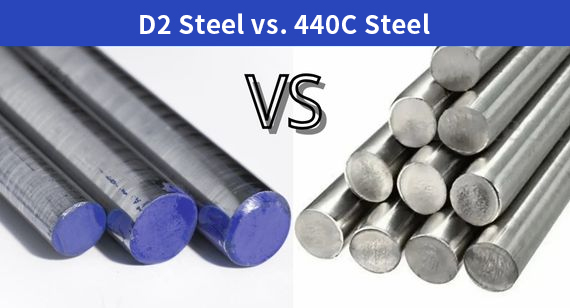
 Since modern manufacturing began, the steel you choose can make a big difference in how a product performs, how it’s machined, and how it holds up over time. This is especially true in industries such as mold making and precision machining, where high-hardness steels like D2 tool steel and 440C stainless steel are frequently compared. Both 440C and D2 steels can reach similar high hardness after heat treatment (typically 58–62 HRC), and they are widely used in wear-resistant and precision parts. But in actual use, they differ in wear resistance, corrosion resistance, machinability, and other properties. As a result, you may ask questions such as: Which is more wear-resistant, D2 or 440C? Which material is easier to machine? To help you figure out these issues, this article will provide clear answers to help you make the optimal decision quickly. From an industrial application perspective, you can take an in-depth look at the chemical composition, mechanical properties, cost, and uses of D2 and 440C in this article. Below is the full comparison of D2 steel vs. 440C steel.
 66
66
 Read more
 VMT 2025 12 26
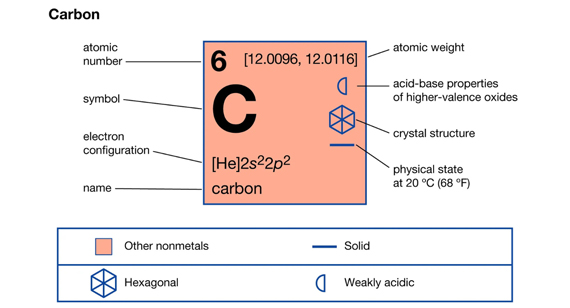
 The density of carbon in grams per cubic centimeter (g/cm³) depends on its structure. Most carbon materials fall within a carbon density range of 1.5–3.5 g/cm³. Amorphous carbon is usually around 1.8 g/cm³, graphite ranges from 2.26 g/cm³, and diamond reaches up to 3.51 g/cm³—the highest among carbon allotropes.
66
Read more
 VMT 2025 12 26
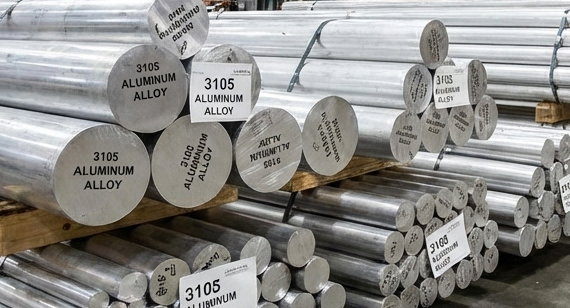
 Across construction, manufacturing, and industrial applications, aluminum alloys are widely used due to their lightweight, corrosion resistance, and ease of fabrication. If you are looking for an aluminum alloy that is both corrosion-resistant and easy to work with for roofing, exterior cladding, or lightweight structural components, 3105 aluminum must be an ideal choice. As a representative of the aluminum-manganese series, 3105 aluminum offers excellent formability, good corrosion resistance, and a balance of lightweight with moderate strength, making it a preferred choice for engineers and manufacturers.This article will provide a comprehensive overview of 3105 aluminum’s properties, benifits and applications, and compare it with 5052 and 1100 aluminum to help you determine whether it is suitable for your project.
66
Read more
 VMT 2025 12 25
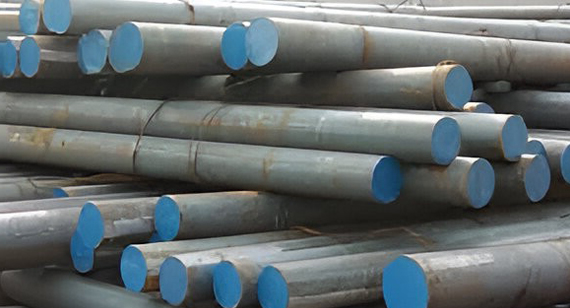
 Materials capable of adapting to various environments and applications are a convenient go-to for manufacturers, 1055 steel is certainly one such example. Thanks to its excellent performance, cost-effectiveness and ease of supply, 1055 steel has well-performed among many manufacturers for making outdoor tools like knives, mechanical parts, and automotive structural components, etc. Here’s what you should know about it: 1055 steel’s composition, properties, manufacturing processes, equivalents, formats and applications, and pros and cons.
66
Read more
 VMT 2025 12 24
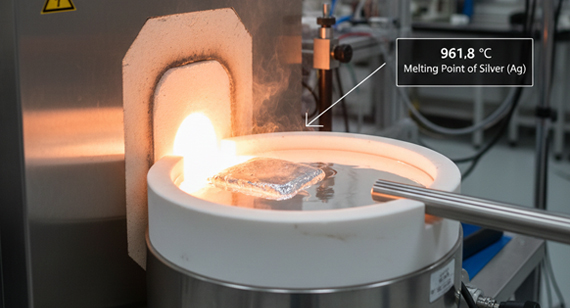
 The melting point of silver is 961.8°C (1763.2°F or 1234.95 K), which is the temperature where solid silver becomes liquid. Silver alloys melt across a range defined by their solidus and liquidus temperatures, depending on composition. Knowing the exact silver melting temperature helps you control casting, welding, and manufacturing processes safely and efficiently.
66
Read more
 VMT 2025 12 24
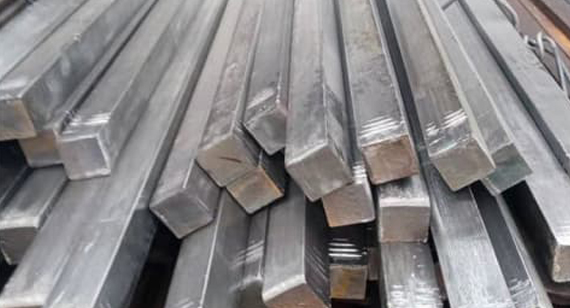
 Of the many carbon and alloy steels available, 5160 steel stands out as a top pick for manufacturing. Many engineers or manufacturers love its unique combination of toughness, strength, and wear resistance, using it to make components like fasteners , springs, and cutting tools. In this guide, we’ll break down its chemical composition, mechanical and physical properties, processing, and typical applications, while comparing it to other steels to help you make informed material selection and design decisions.
66
Read more
 VMT 2025 12 23
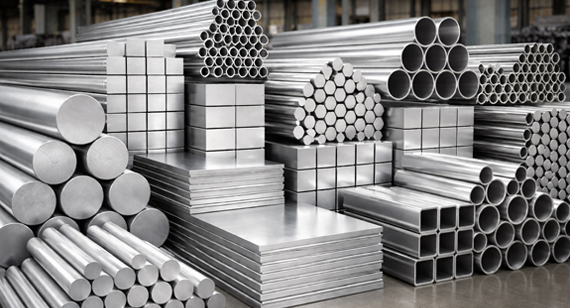
 Thanks to the high purity 1070 aluminum’s excellent performance, it is often used in applications that require excellent electrical and thermal conductivity as well as corrosion resistance. But whether 1070 aluminum is suitable for your uses or not, it may depend on several factors, including material temper, forms, formability and the actual service environment. To help you better evaluate this material, this article fully introduces 1070 aluminum in terms of its properties, supply forms, typical applications, and advantages and limitations. You can learn more about it in our rundown below.
66
Read more
 VMT 2025 12 22
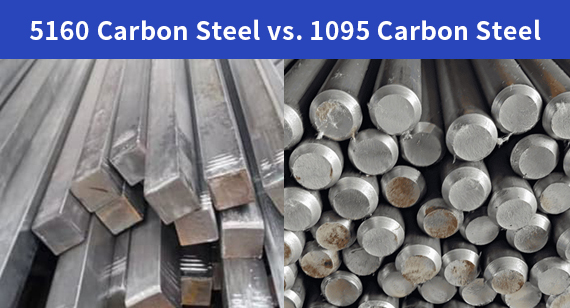
 In the field of tools, mechanical components, and spring manufacturing, 5160 and 1095 stand out as two of the most used high-carbon steels. Although both belong to the same carbon-steel family, they differ in several key characteristics. Selecting the right grade can greatly influence your product’s service life, reliability, and overall manufacturing cost. To help guide your decision, this article breaks down how 5160 and 1095 compare in terms of performance, cost, heat treatment, availability, and typical applications. Below is a complete comparison of 5160 vs. 1095 steel.
66
Read more


 +86 15099911516